Your agent gets the rules for the files it touches.
Damper keeps your project’s context as sections and routes. Before an agent changes anything, it names the files and gets back exactly the sections, critical rules and checklist scope that govern them, not the whole wiki.
Project context is included on every plan, Free too.


Demo project with made-up data.
Paths in, governing context out.
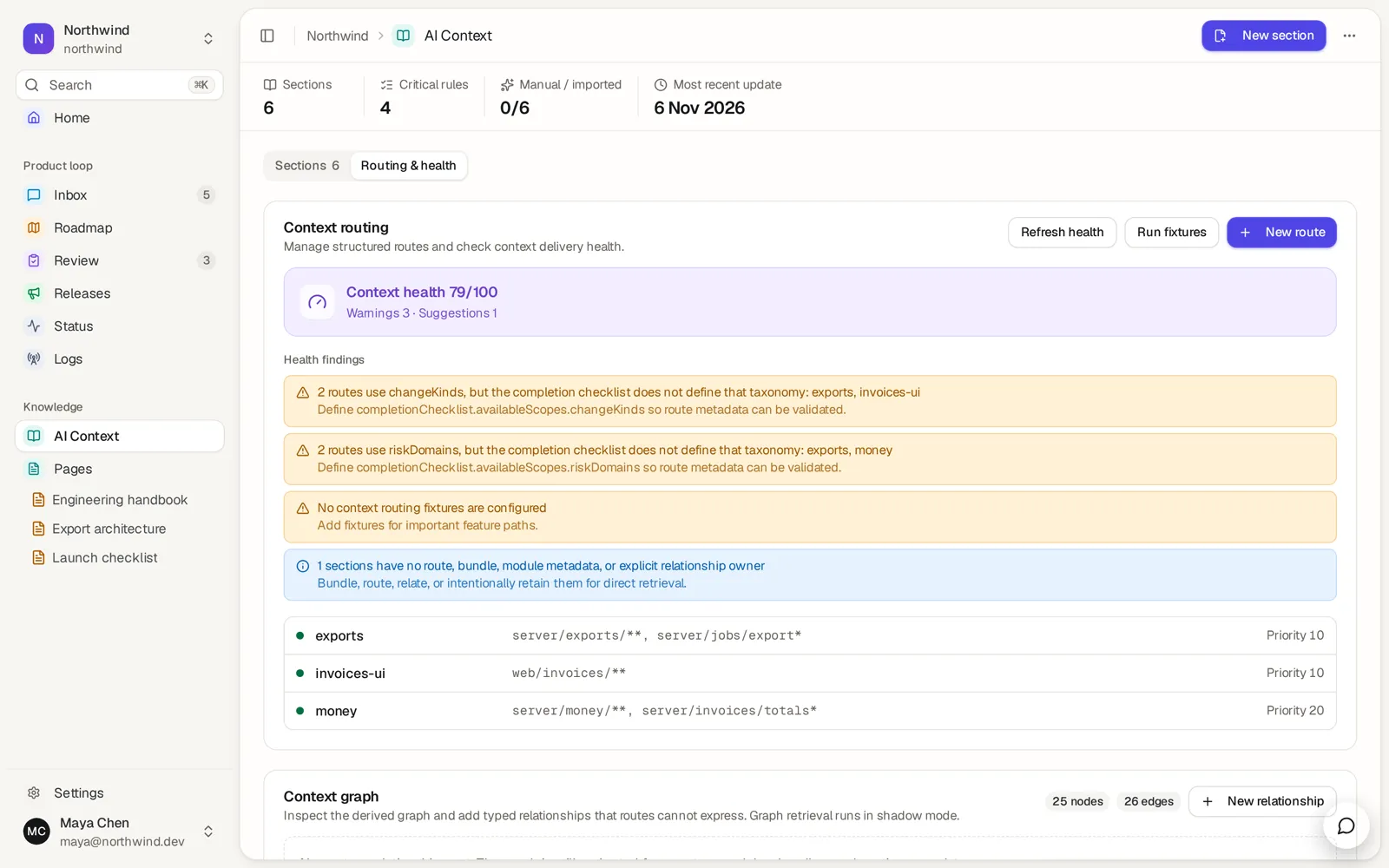
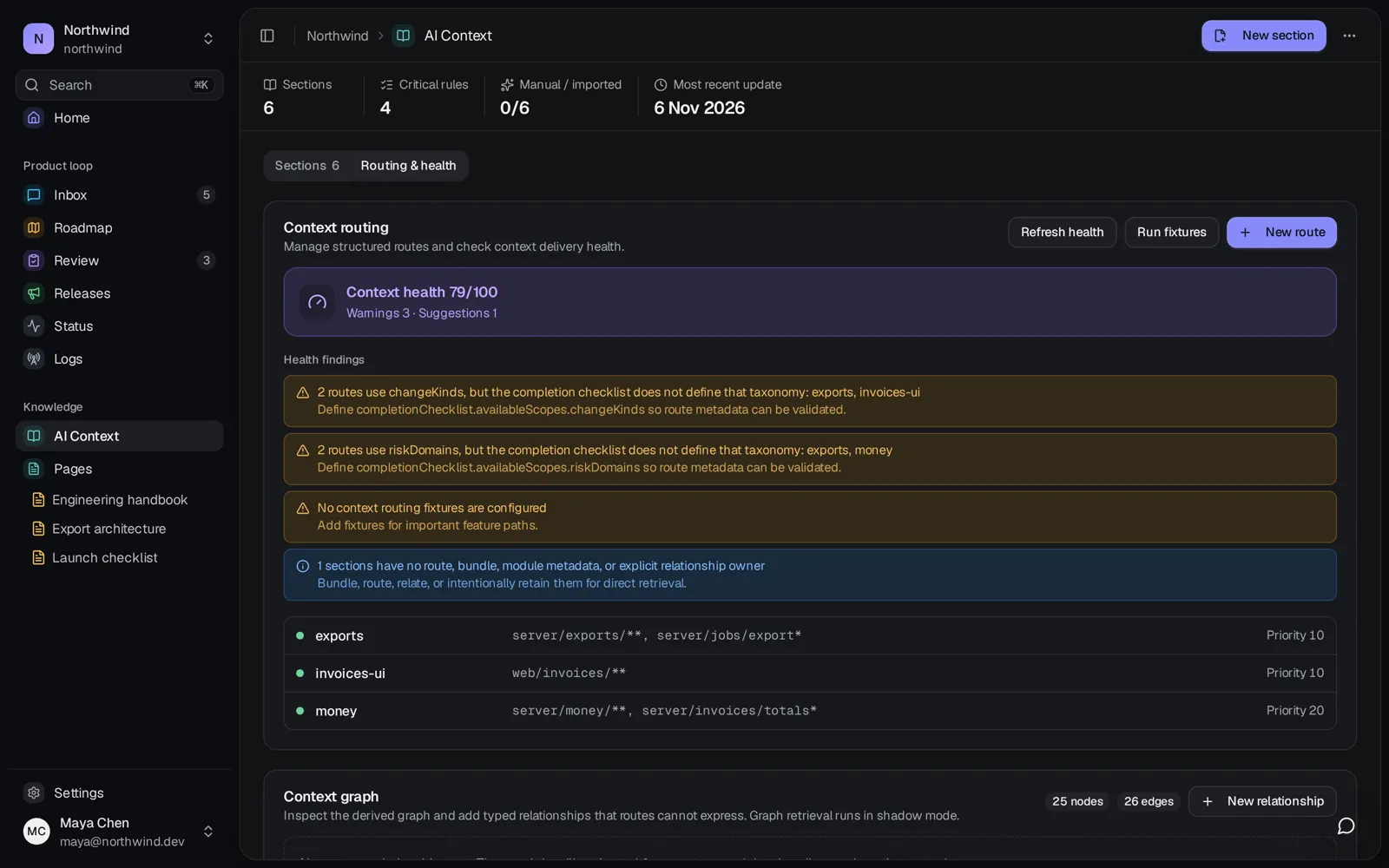
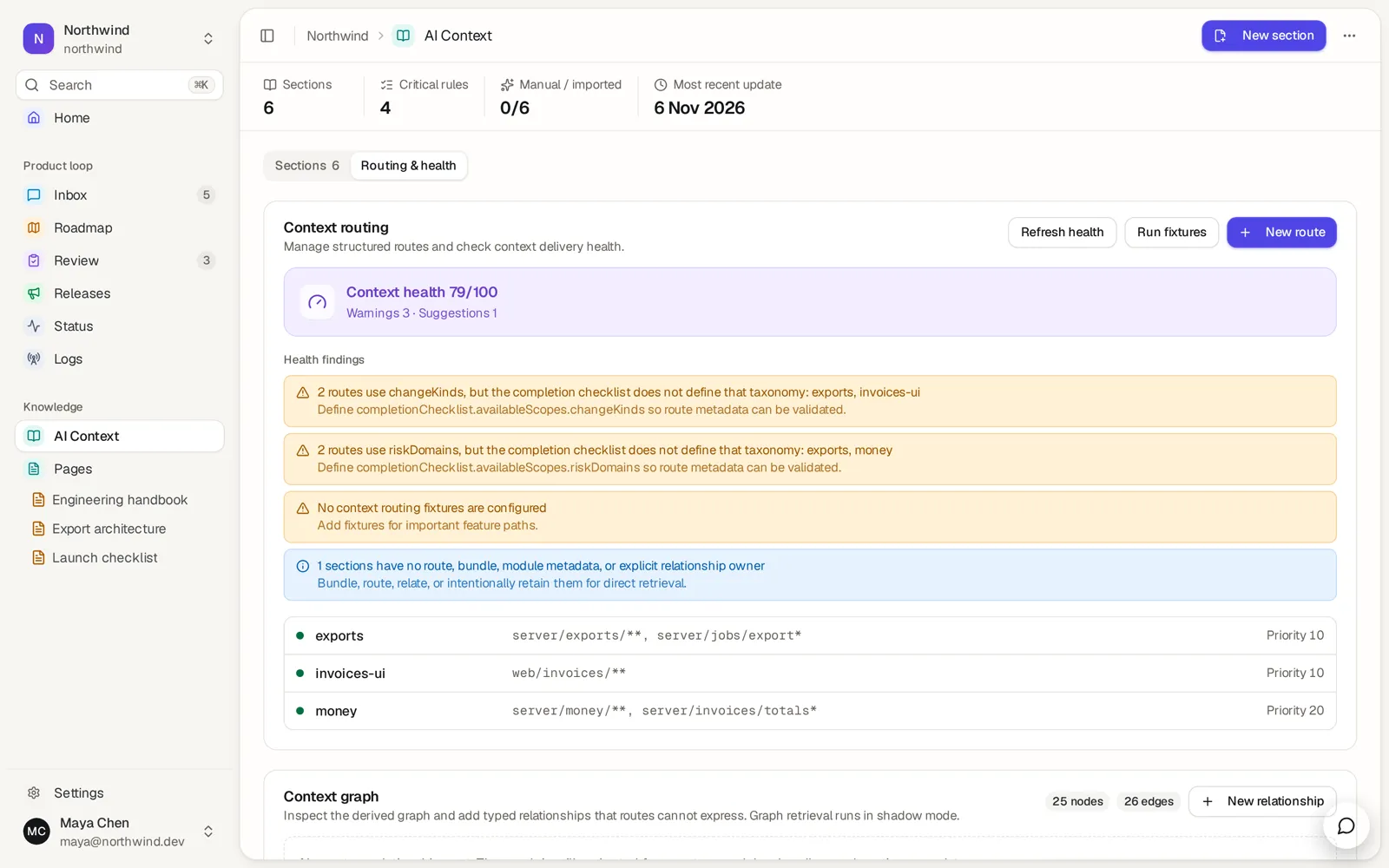
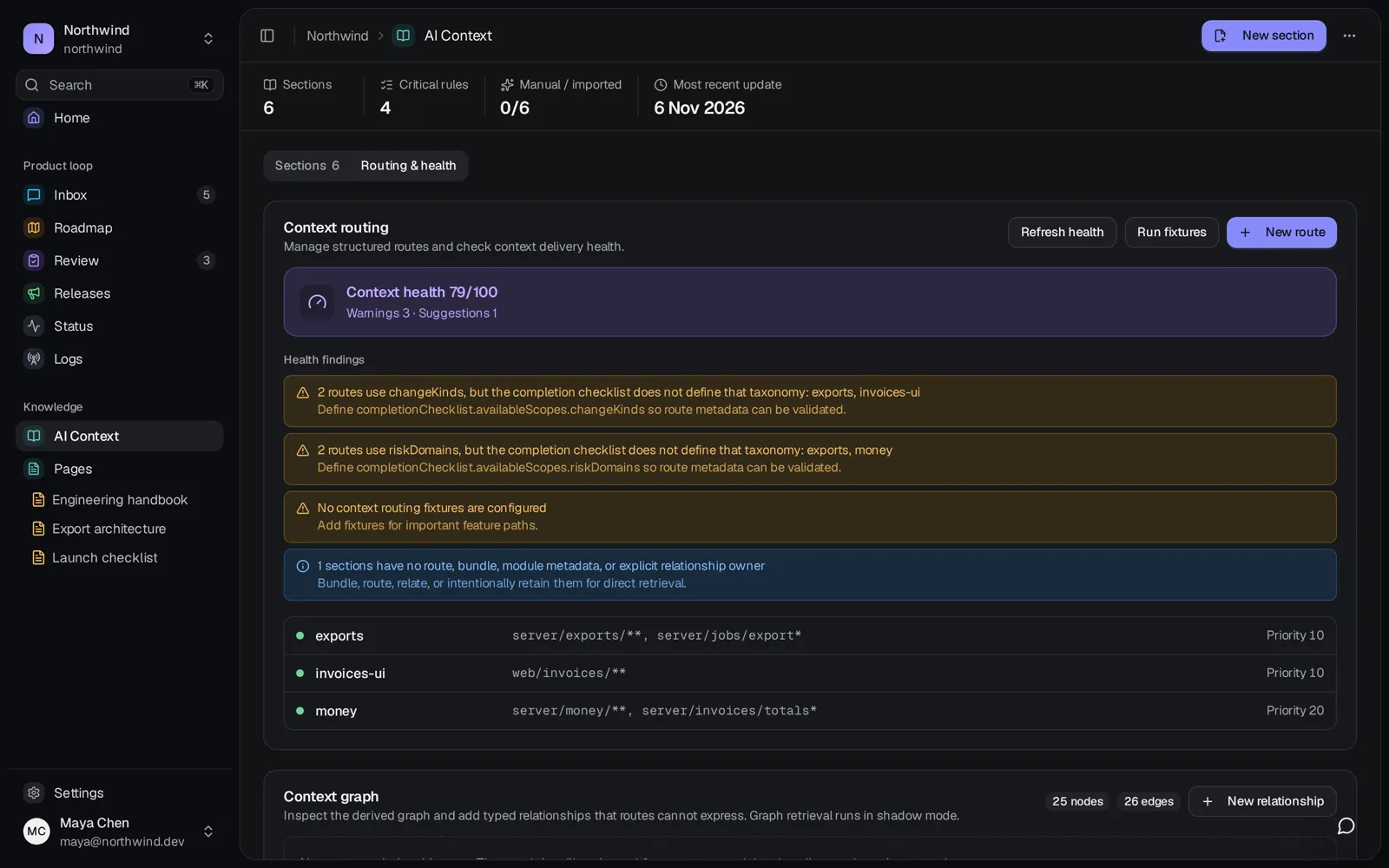
Routes map path patterns to the sections that govern them, with the change kinds and risk domains they carry. Agents ask with the paths they will change.
prepare_work
One call before feature work: governing sections, critical rules, checklist scope and verification commands for the paths in play.
resolve_context
The same routing for any list of paths, whenever the change grows.
Critical rules
Short, mandatory rules attached to a section, returned first so they are hard to miss.
Checklist scope
The surfaces, change kinds and risk domains a change touches, so the right completion checks apply.
Context you can trust, and check.
A health check scores your routing and lists what is missing: routes without fixtures, sections nothing routes to, scopes your checklist doesn’t define. Fixtures pin down which sections a path should get.
- Context health — a score with warnings and suggestions you can act on.
- Route fixtures — expected results for important paths, run on demand.
- Maintenance candidates — sections that look stale or unowned.
A typed graph, alongside your routes.
Damper also derives a context graph from your routes, sections and modules: typed nodes and edges with authority and confidence. It runs in shadow mode next to routing, so you can compare what it would return before relying on it.
- Typed relations — governs, depends_on, implements, documented_by, supersedes and more.
- Explainable — every edge has a source. No black-box retrieval deciding what your agent believes.
- Shadow mode — prepare_work shows the graph’s candidates next to the routed result; routing stays the source of truth.
Start from your repository.
The Damper CLI builds context from your code. It packs the repository locally, your agent proposes sections, and publishing shows a preview of the change before anything is saved. A check command tells you when context has gone stale.
- Local by default — the source pack stays on your machine; only the sections you publish are sent.
- Preview before publish — see exactly what changes in your project’s context.
# scan your repository locally and propose context sections
npx @damper/cli context prepare
npx @damper/cli context finalize --packet <file> --proposal <file>
npx @damper/cli context publish --draft <file>
# read-only freshness check, no model call
npx @damper/cli context check --max-age-days 30Context on every plan.
| Compare | Free | Pro | Team | Enterprise |
|---|---|---|---|---|
| Project context, routing and the context graph | Included | Included | Included | Included |
| AI agent execution (MCP) | Included | Included | Included | Included |
Free
- Project context, routing and the context graph
- Included
- AI agent execution (MCP)
- Included
Pro
- Project context, routing and the context graph
- Included
- AI agent execution (MCP)
- Included
Team
- Project context, routing and the context graph
- Included
- AI agent execution (MCP)
- Included
Enterprise
- Project context, routing and the context graph
- Included
- AI agent execution (MCP)
- Included
Give your agents the rules, not the whole wiki.
Write your context once, route it by path, and every agent session gets what governs its change.
Free plan, no credit card. Your roadmap can be live in five minutes.